
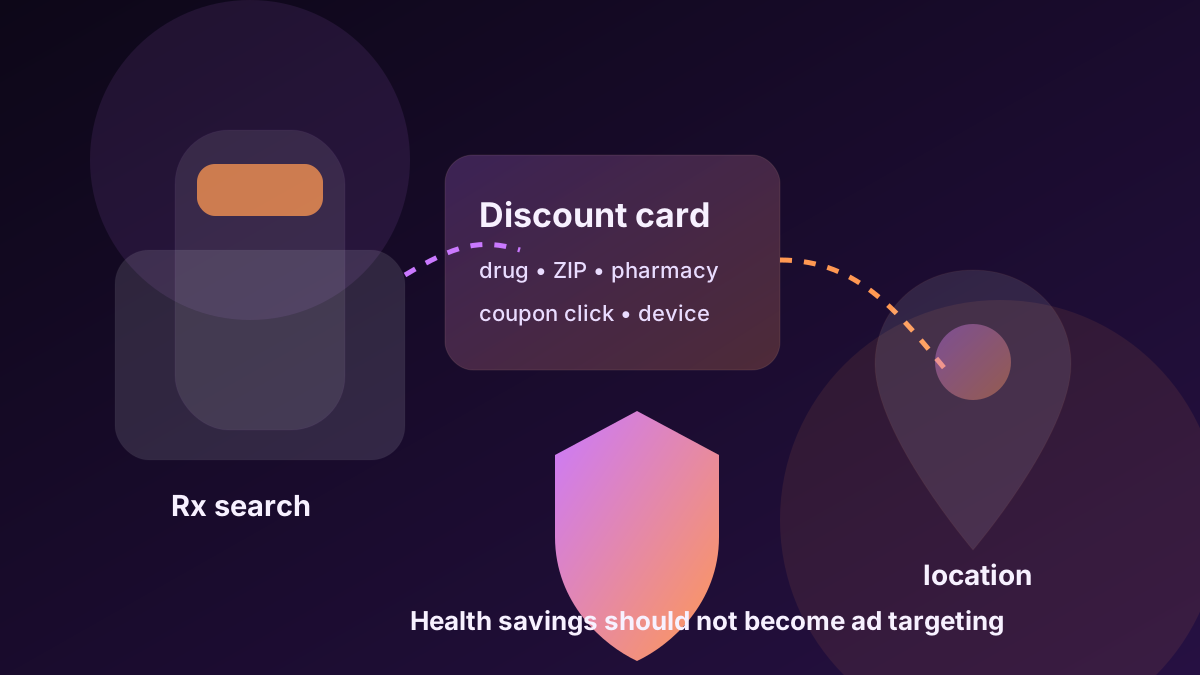
Pharmacy discount card privacy risk is not an argument against saving money on medication. Prescription costs are stressful, and a coupon or discount app can make the difference between filling a prescription and delaying care. The privacy problem is that the path to the discount can reveal sensitive health signals before the user ever reaches the pharmacy counter. Drug name, dosage, ZIP code, pharmacy choice, search timing, coupon click, device identifiers, account email, and refill behavior can say a lot about a person or household.
Regulators have already treated this category as serious. The FTC's GoodRx action alleged that the company shared sensitive health information with advertising platforms and failed to report unauthorized disclosures under the Health Breach Notification Rule. The lesson for ordinary users is not that every discount tool behaves the same way. It is that prescription-search and coupon data can be sensitive enough for enforcement when it is shared in ways consumers did not expect.
The BetterHelp settlement reinforces the broader health-adjacent warning. The FTC said the company shared consumers' sensitive health data for advertising after promising to keep it private. Prescription discounts, therapy searches, fertility products, mental health tools, and chronic-condition supplies all sit in the same emotional zone for users: they may look like consumer services, but the data can reveal health needs, stigma, family planning, disability, addiction treatment, or caregiving responsibilities.
HIPAA adds another source of confusion. HHS explains privacy protections for health information handled by covered entities and business associates, but not every app, coupon site, advertiser, or comparison tool a consumer touches is automatically experienced by the user as inside the same protected medical system. A person may assume anything involving a prescription is treated like a doctor's office. The web may route them through marketing pages, analytics, location lookups, and third-party tools that do not feel medical to the underlying tracking stack.
Pew's privacy research explains why the trust gap matters. Many Americans say they feel little control over company data collection. Prescription costs make that imbalance sharper because refusal is expensive. A user who needs insulin, an antidepressant, HIV medication, fertility treatment, or a child's medication may feel forced to trade privacy for affordability. Consent is weaker when the alternative is paying more for care.
The practical checklist is to compare prices without creating an account when possible, avoid signing in with a primary identity until necessary, use a privacy-protective email alias, deny unnecessary location access and enter a ZIP manually, read whether the tool shares data for advertising, avoid searching sensitive prescriptions from shared devices, and ask the pharmacy whether a cash price, manufacturer program, or insurer path works without an extra data broker in the middle. None of these steps guarantees perfect privacy. They reduce unnecessary exposure around a high-stakes need.
The risk is not limited to the final prescription claim. A search for a drug that treats depression, fertility, HIV prevention, diabetes, weight loss, addiction, or a child's condition can be revealing even if the user never redeems the coupon. A pharmacy map lookup can expose where care is reachable. A reminder email can show refill timing. A clicked coupon can connect health intent to a browser session full of other identifiers. That is why health-adjacent commerce deserves stricter defaults than ordinary retail browsing.
The family context makes the stakes higher. One household device may search for a parent's blood-pressure medicine, a teenager's acne prescription, a partner's mental-health medication, and a child's antibiotic in the same browser profile. A discount flow that treats all of those searches as ordinary acquisition events can accidentally merge care roles, ages, conditions, locations, and financial stress. The user may only be trying to find the least expensive pharmacy before dinner. The tracking stack may learn a map of the household's medical needs.
cloak's anti-exploitation framing fits this category because the problem is not ordinary shopping inconvenience. It is economic pressure attached to health data. A privacy defense layer should treat prescription searches, pharmacy location, coupon redirects, and health-adjacent purchase signals as sensitive by default, weaken tracking around them, and warn when a savings flow starts behaving like an advertising funnel.