
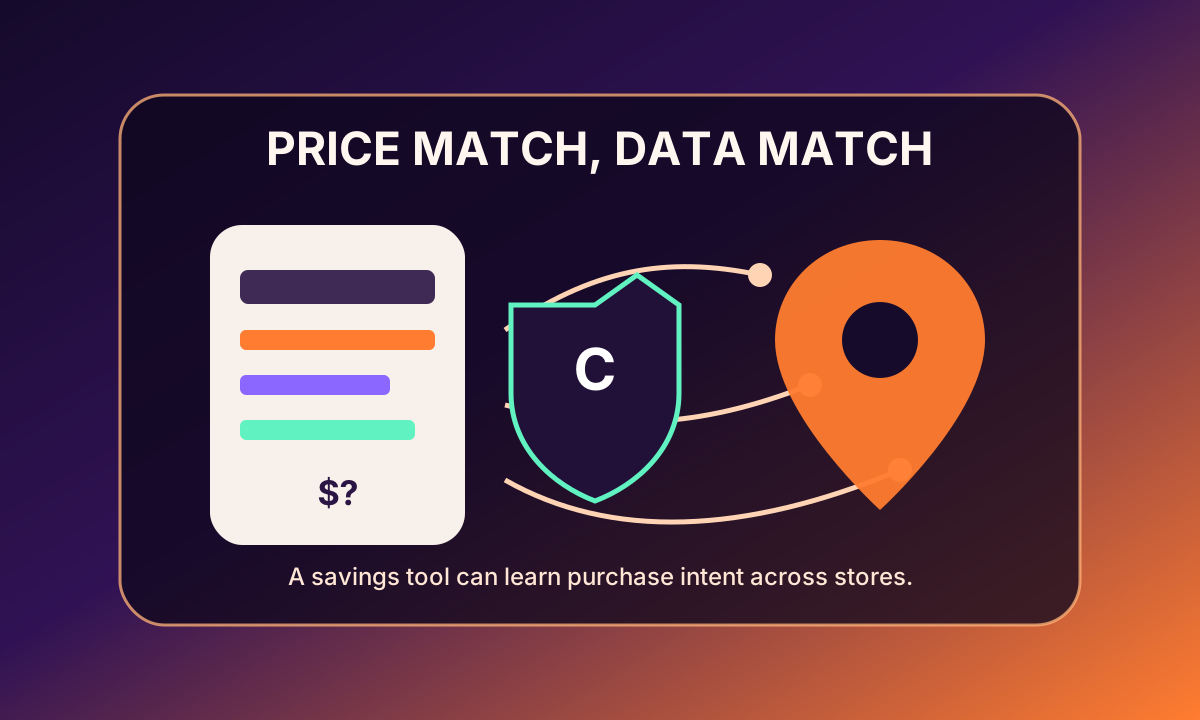
Price match apps privacy risk is easy to underestimate because the product promise is friendly: install this tool, scan this barcode, upload this receipt, compare this cart, and spend less. That can be genuinely useful, especially for families dealing with grocery inflation, travel costs, school supplies, prescriptions, electronics, and household basics. The tradeoff is that comparison tools can sit across retailers instead of inside one store. They may learn what you wanted, where you shopped, which prices made you hesitate, which receipt proved the purchase, which store was nearby, and which categories matter enough for you to chase a lower price.
The FTC's mobile privacy disclosure report is relevant because it focuses on transparency in apps that collect data through phones. A price match app may ask for camera access to scan barcodes or receipts, location access to identify nearby stores, notification access to push deals, email access to find receipts, or account login to sync history. Each permission can have a reasonable product explanation. Together they can create a portable shopping profile that is richer than any single merchant's view. A shopper trying to save three dollars may not realize they are teaching an intermediary their household demand curve.
The FTC's data-broker report adds the ecosystem risk. Consumers often cannot see how information about purchases, interests, households, and identities moves among companies. Price comparison data is commercially attractive because it reveals active intent: not just that someone likes coffee makers, but that they compared models, checked a competitor, waited for a discount, uploaded a receipt, or bought on a certain date. That kind of signal can support segmentation, lead scoring, retargeting, market research, and personalized offers long after the original price check is finished.
Adtech makes the concern larger than one app. The ICCL has documented the scale at which data can be broadcast in real-time bidding systems. A comparison tool does not have to be malicious for its environment to be leaky. If pages, app screens, or emails around the deal flow include advertising identifiers, analytics tags, referral codes, or campaign pixels, then the act of bargain hunting may become part of a broader profile. The user thinks they are checking whether a price is fair. The market may also learn that this person is price-sensitive, brand-flexible, recently shopping in a sensitive category, or likely to respond to urgency.
Pew's privacy findings explain the emotional mismatch. People want control, but savings tools often ask for more data at the exact moment the user feels financially pressured. That can make consent feel less free. If rent, groceries, school supplies, holiday gifts, or medical purchases are stretching a budget, the shopper may accept permissions they would reject in a calmer moment. The anti-exploitation frame matters here: privacy defense should protect people when economic pressure makes data bargains look unavoidable.
The highest-risk version is not a simple public price lookup. It is the bundle of receipt scanning, loyalty linking, inbox scanning, push alerts, and location-based deal ranking. A receipt can expose brands, quantities, times, store numbers, payment fragments, coupons, and household routines. A location permission can show which stores are realistically reachable. A loyalty connection can connect the comparison layer to a named retail identity. None of those signals is inherently forbidden, but together they can reveal a family's budget constraints and purchase rhythms with uncomfortable precision.
A practical checklist is to use comparison tools without account linking when possible, deny persistent location unless a specific nearby-store feature is needed, avoid granting email-inbox access for receipt discovery, upload only receipts you are comfortable associating with the service, read whether rewards require data sharing, and delete histories after a rebate or claim is complete. cloak should not shame people for looking for discounts. It should help them see when a savings layer becomes a cross-store surveillance layer, reduce unnecessary tracking around comparison sessions, and keep price pressure from turning into another profile built against the shopper.