
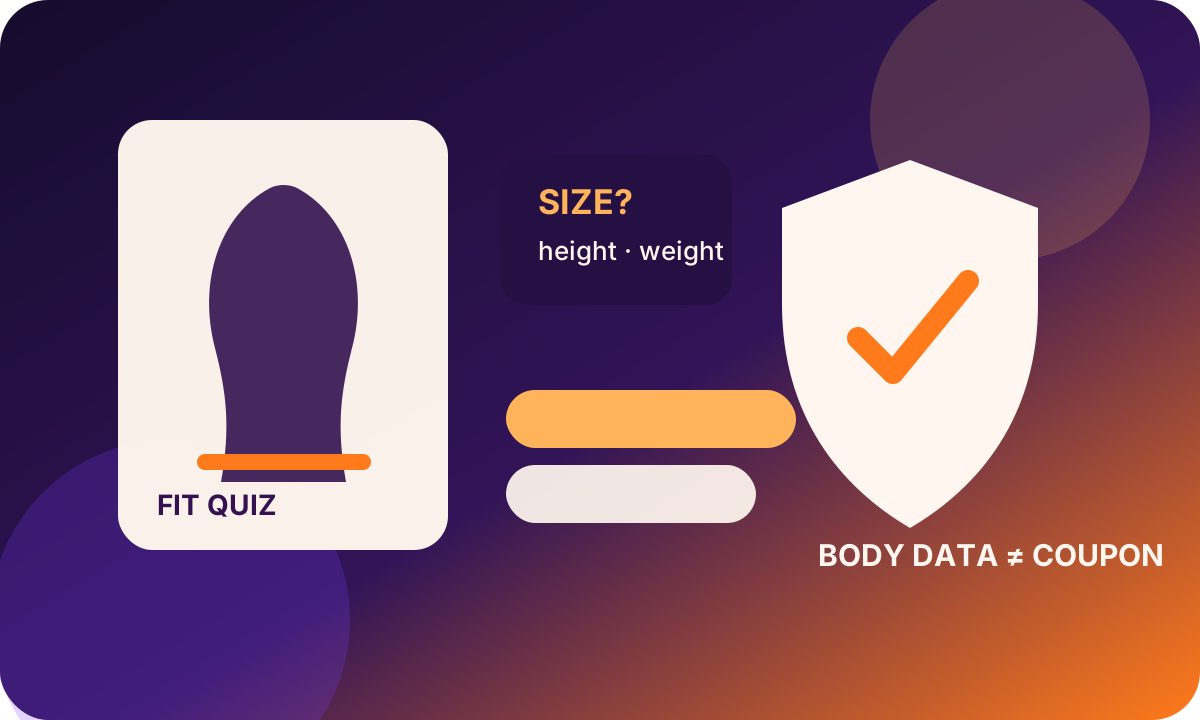
Size recommendation tool privacy risk starts with a reasonable problem: clothes, shoes, and gear are hard to buy online. A fit finder can save time, reduce returns, and prevent waste. But the same flow may ask for height, weight, age range, gender, body shape, favorite brands, usual sizes, return reasons, photos, or fit preferences before the shopper has decided to buy. That is not just shopping assistance. It is a sensitive profile of body, identity, uncertainty, and intent.
The risk is highest when the fit tool is treated as separate from checkout. A shopper may answer questions because the widget looks like a harmless calculator, not because they understand that the answers can be stored, joined to an account, or used for marketing. Body measurements can reveal health changes, pregnancy, disability, gender expression, children in the household, or purchasing for someone else. Even when each answer is ordinary, the combined record can become more intimate than a normal cart.
Data minimization is the clean baseline. The CPPA says collection, use, retention, and sharing should be reasonably necessary and proportionate to the disclosed purpose. A fit tool may need temporary sizing inputs to recommend a size. It does not automatically need to keep those answers forever, attach them to advertising audiences, or use them to infer willingness to pay. NIST's Privacy Framework reinforces the same point: privacy risk comes from linking, inference, retention, and unexpected use, not only from a data breach.
Dark pattern risk appears when the recommendation flow makes disclosure hard to understand. The FTC's dark patterns report calls out design that hides material terms, makes choices asymmetric, or nudges people into decisions they might not make with clear information. A fit quiz can do that if it makes the skip option hard to find, implies that sensitive answers are required for basic checkout, or bundles sizing help with email signup and account creation. The shopper came for fit confidence, not a lifetime customer dossier.
There is also an economic exploitation angle. Size and return signals can tell a retailer who is anxious, who is hard to fit, who tends to keep bad purchases, or who may pay more for certainty. A merchant can legitimately use fit data to reduce returns and improve recommendations. The boundary is crossed when the same data feeds pressure tactics, personalized scarcity, segmentation, or ad targeting that the shopper never asked for. A fit tool should lower friction, not create a new lever of manipulation.
Consumers can reduce exposure by using the least specific input that works. Prefer generic size charts when the purchase is not sensitive, avoid uploading photos unless the benefit is clear, skip account creation when a one-time recommendation is enough, and do not answer body questions that are unrelated to the item. If the widget asks for email before showing the result, treat that as a marketing trade rather than a purely functional step. For children's clothing, health-related products, or gifts, be especially careful about saving profiles.
Retailers can make fit tools trustworthy by separating calculation from profiling. Explain what data is needed, make optional fields truly optional, show the recommendation without forcing email capture, retain sizing answers only as long as necessary, and keep body data away from unrelated advertising or price experiments. If the business wants to personalize later, ask separately and plainly. Trust grows when the customer can see that a measurement is used to find a size, not to label a person.
cloak's active-defense role is to notice when a fit helper starts acting like a profiling intake form. A strong warning would distinguish practical sizing from unnecessary identity capture, flag email-gated results, and remind the shopper that body details are not the same as a coupon preference. It should also treat children's sizing, medical-adjacent products, and repeated return-history questions as higher-risk contexts. The goal is not to block useful recommendation tools. It is to keep a helpful fitting room from becoming another hidden surveillance surface.