
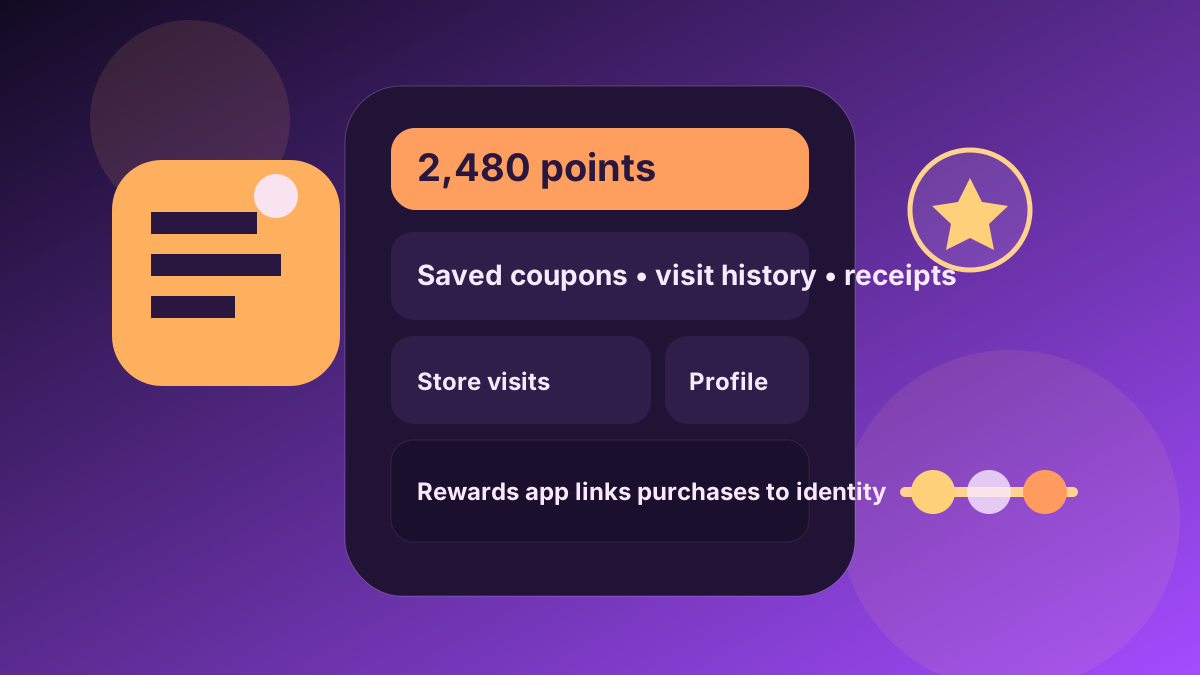
Retail rewards app privacy risk starts with a simple trade: install the app, scan the barcode, get the points. The problem is that the small transaction can become a long-lived record. A rewards account can bind a phone number, email address, device, in-store visits, receipts, coupons, and repeat purchases into one profile. Once that profile exists, the store can recognize the same shopper across visits, channels, and promotions far longer than the person expects.
Rewards programs are not just discount systems. They are data systems. The more a shopper uses them, the more the retailer can learn about routine groceries, pharmacy habits, family size, preferred brands, response to coupons, and how price-sensitive the household looks. That information can support useful perks, but it can also feed segmentation, targeting, offer steering, and downstream sale or sharing of data in ways the user does not really see.
The FTC has long pushed for more transparency and consumer control in the data broker ecosystem because purchase information can travel far beyond the original merchant. That lesson fits rewards apps directly. Even if the retailer is not labeled a broker, a loyalty profile can still become a reusable data asset that is richer than the customer realizes. What begins as a discount can end as a durable dossier.
The CPPA's data-minimization advisory offers the cleanest rule of thumb: collect, use, retain, and share only what is reasonably necessary and proportionate to the disclosed purpose. For a rewards app, the purpose might be to apply points, honor offers, or track eligibility. It is harder to justify open-ended retention of precise visit history, device fingerprinting, or unrelated sharing just because the app is convenient and popular.
The NIST Privacy Framework helps separate the good from the excessive. A retailer can identify the customer, communicate what the app does, and control the data flow without turning every coupon redemption into a behavioral feed. That means clearer notice, tighter defaults, shorter retention windows, and a real boundary between operations data and marketing data. If the app cannot explain its profile-building in plain language, the app is probably collecting more than it needs.
Consumers should treat rewards apps as identity products, not just savings products. Use a separate email if the savings are not worth the link to your main inbox, avoid syncing extra permissions, decline optional location features, and do not assume a barcode scan is anonymous just because it happens in a store aisle. If the app offers tiny discounts in exchange for broad tracking, the real question is whether the discount is worth the profile.
Businesses can make the tradeoff fairer. Give a non-app path to the same basic price, explain whether points require a persistent account, do not silently couple loyalty use with ad targeting, and let shoppers reset or delete their history without losing the ability to buy. A rewards program should reward loyalty, not lock in a surveillance relationship.
Household complexity makes this worse. A shared family tablet, a teen's phone, or a parent who scans for everyone can mix adults, kids, groceries, and pharmacy runs into one retail identity graph. That is useful for personalization and terrible for clarity. A good rewards design should let people use the savings without forcing every family member into a single household dossier, and it should make opt-out or deletion real instead of decorative.
A retailer can also preserve convenience without overlinking identities by giving shoppers a guest or pseudonymous mode for basic perks, then asking for a fuller profile only when the benefit is obvious. That way a quick coupon scan does not become an always-on membership record. In privacy terms, the least data is often the most sustainable reward.
cloak's active-defense role is to flag when a rewards flow turns into profile capture. It should warn when a loyalty sign-in suddenly expands the data surface, when a coupon request pulls in more tracking than the offer needs, and when the same retail account starts making every visit easier to recognize across sessions.