
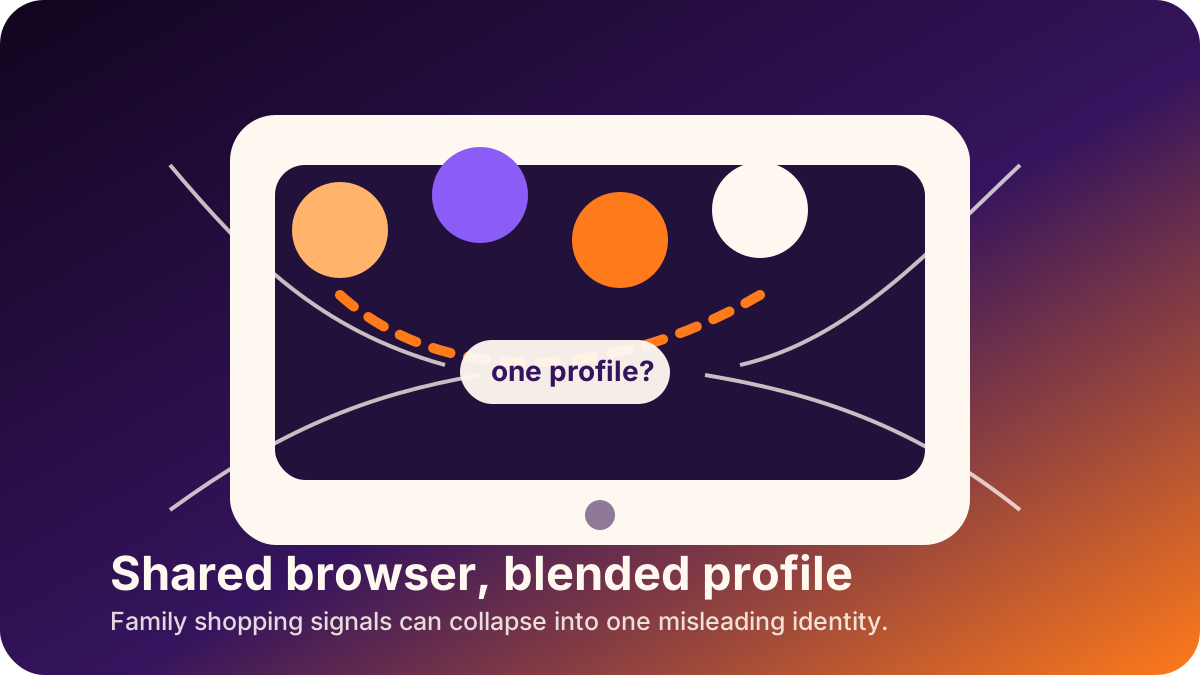
Shared family device shopping privacy is easy to underestimate because the device feels ordinary. A parent checks groceries on a tablet, a child searches for shoes, a roommate compares flights, and someone else buys a gift in the same browser. To the household, those are separate people and separate contexts. To a store, ad network, analytics stack, or personalization system, the signals can collapse into one messy profile attached to one browser, one device fingerprint, one account, or one household network.
That matters because personalization systems do not need perfect identity to act. They need useful continuity. If the same browser repeatedly visits baby products, medical supplies, gaming gear, school materials, and travel deals, the site may treat those clues as one shopper's interests or one household segment. The page can remember products, retarget ads, change recommendations, preserve carts, or escalate urgency based on a blended history no individual person would have chosen to disclose.
The W3C fingerprinting guidance helps explain why clearing one cookie is not a complete reset. Browsers expose many characteristics that can help correlate visits or narrow a user into a recognizable set. On a shared device, that means several people's behavior can be attached to the same repeatable environment. Even if no one signs in, the device can become the stable container that makes the household easier to recognize next time.
Pew's privacy findings show why people find this asymmetry so frustrating. Many Americans believe companies are collecting more than they can understand or control. Shared devices make that loss of control more concrete: one person's private search can affect another person's recommendations, ads, or checkout pressure. The creepy moment is not always 'the store knows me.' Sometimes it is 'the store thinks my family is one person, and now everyone is getting the consequences.'
There is also a child and household-sensitivity layer. A shared browser can contain school supplies, toys, family health products, gifts, financial stress signals, and location clues. Even when a site is not intentionally targeting children, the profile can still absorb child-related or family-related behavior. California privacy rules and CPPA resources are a reminder that household and sensitive data are not abstract categories. They shape real rights, opt-outs, and expectations around how personal information should be handled.
Dark patterns make shared-device risk worse. The FTC's dark-patterns report describes interfaces that steer people toward choices they might not otherwise make. On a shared device, pressure can be miscalibrated because the site is reacting to a blended history: one person browsed twice, another abandoned the cart, a third clicked a discount email, and now the next shopper sees urgency copy or a sign-in prompt. The system may be optimizing against a household ghost rather than the human in front of the screen.
The practical defense is not to ban family devices. It is to separate contexts where it matters. Use separate browser profiles for adults and children, avoid saving payment methods in a shared browser, clear carts before handing off a device, use guest checkout when the account is not needed, and treat health, school, financial, and gift purchases as higher-sensitivity sessions. cloak's job is to make the blended-profile problem visible: when a session looks like it is carrying old household memory into a new decision moment, the user should know the page is not starting from zero.