
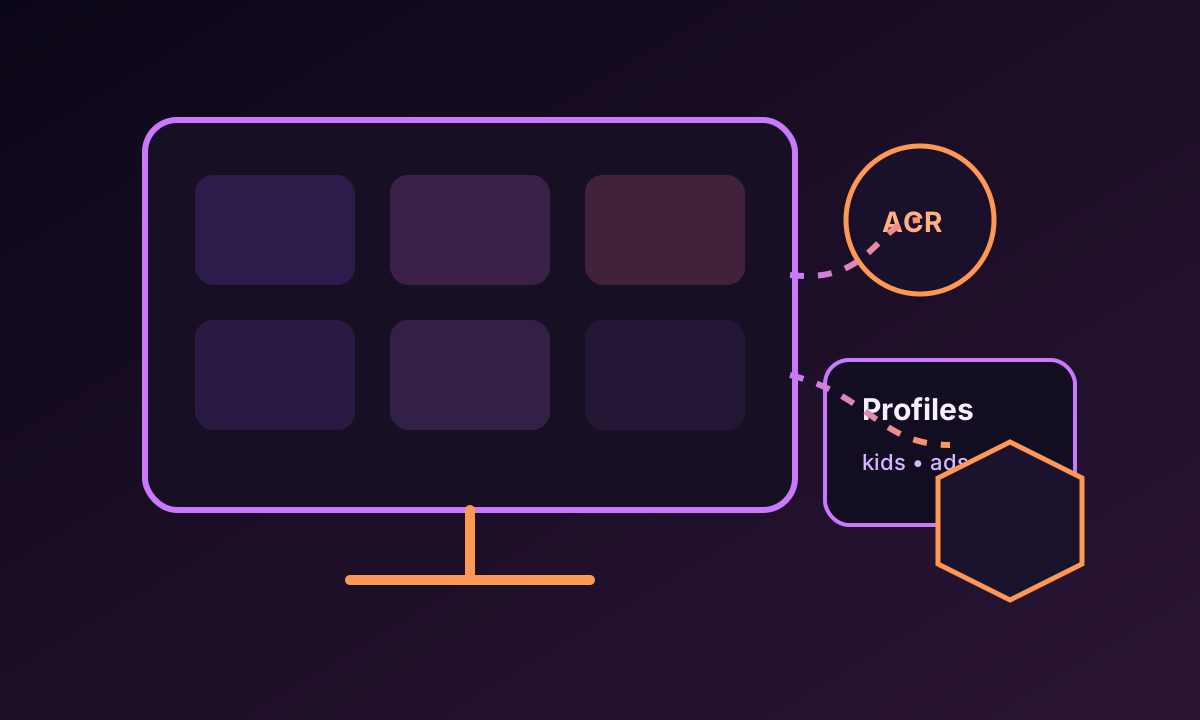
Smart TV streaming app privacy risk is bigger than whether one app knows what you watched last night. A modern TV can carry device identifiers, household profiles, voice search, app logins, ad IDs, viewing history, Wi-Fi network clues, location region, purchase signals, and children's content patterns. The screen sits in the most shared room in the house, so one sign-in can describe several people at once: adults, kids, guests, roommates, and anyone whose viewing habits become part of the same household profile.
The FTC's VIZIO case is the clearest warning for ordinary consumers. The agency said VIZIO collected second-by-second viewing information from millions of TVs and shared it with third parties for targeting and measurement without proper notice and consent. The details matter because automatic content recognition can infer what is on screen even when the program comes from cable boxes, streaming devices, DVDs, or over-the-air signals. A TV can therefore observe the household's attention, not just the apps installed on the TV.
Streaming sign-ins add another layer. A user may create profiles for kids, subscribe through a marketplace, link a phone, scan a QR code, accept personalized ads, or sign in with a platform account. That flow can tie viewing to email addresses, payment cards, household location, device IDs, and app-store billing. A family that only wanted to watch one show may leave behind a durable record of genre interests, religious or political documentaries, health content, language preferences, sleep routines, and whether a child repeatedly watches the same topic.
The privacy pressure often hides in convenience design. A TV asks to enable viewing recommendations, personalized ads, voice features, and cross-device syncing during setup, when the household is trying to make the remote work. An app may make ad-supported viewing the default, preselect profile sharing, or push QR-code activation that moves data from the TV to a phone browser. Data minimization should still apply: a service can recommend shows without collecting every possible identifier, and a manufacturer can update software without turning the screen into an always-on ad-measurement surface.
Smart TV privacy also has a resale and guest problem. Hotels, rentals, dorms, short-term stays, and secondhand TVs may keep old accounts, app tokens, watch histories, voice settings, or paired devices unless someone resets them. A houseguest may sign into a streaming app and forget to remove it. A child may install apps that collect data under a parent account. The NIST Privacy Framework's lifecycle lens is useful here because privacy does not end at setup; it includes retention, access, deletion, and what happens when the device changes hands.
Practical defenses include reviewing TV privacy settings during setup, turning off automatic content recognition if available, declining personalized ads where possible, using separate profiles for children, signing out after guest use, resetting rented or sold devices, avoiding unnecessary voice features, and checking app permissions. If a streaming service requires a phone number, precise location, social login, or broad profile sharing to show basic content, treat that as a signal to slow down. The living-room device should not need more identity than the viewing relationship requires.
cloak should defend smart TV and streaming flows as household surveillance surfaces. It can warn when QR activation pages load trackers, when a TV setup page nudges personalized ads, when a streaming app asks for unnecessary phone or location data, or when a device resale checklist is missing account removal. This is anti-exploitation in a home context: make the invisible data layer visible before relaxation becomes profiling. A family's watch history should help them find shows, not quietly become a cross-device dossier for advertisers, platforms, and anyone else buying attention signals.
This is not the same as ordinary web tracking because the signal is collective. One device may represent a child's cartoons, a roommate's sports package, a parent's medical documentary, and a guest's app login. If that shared screen is treated as one advertising household, the profile can become both intimate and wrong. Strong privacy design should make household boundaries explicit, not assume the person holding the remote consented for everyone in the room.