
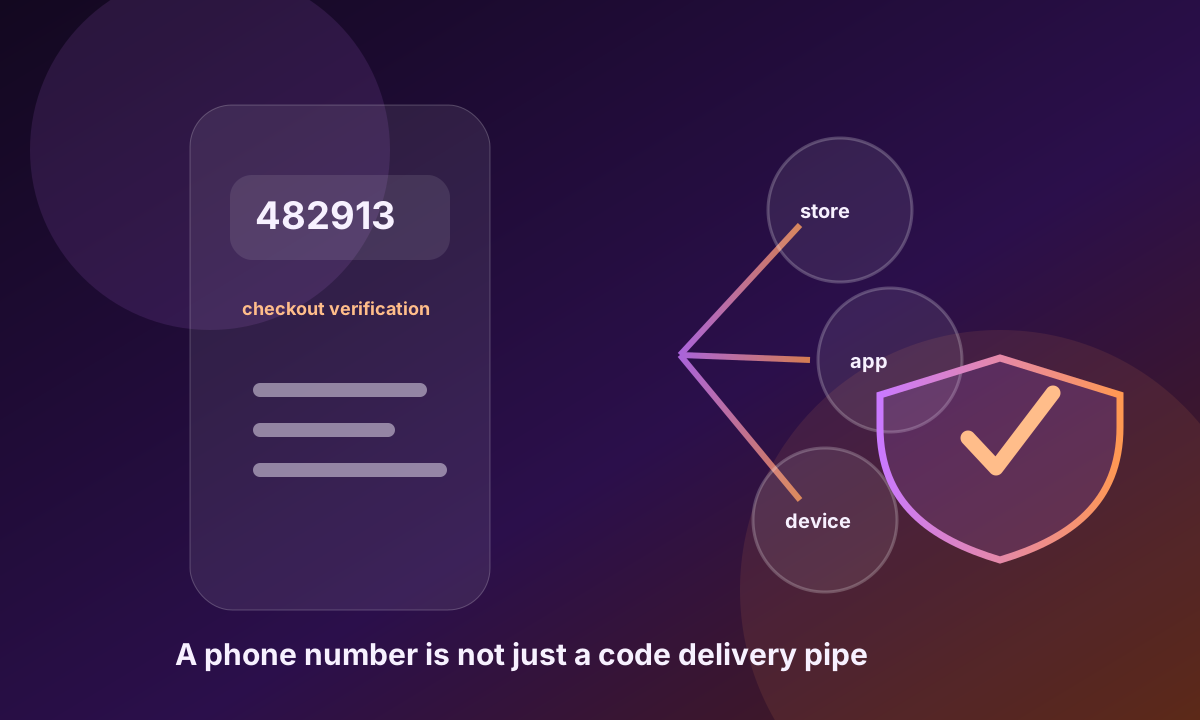
SMS login code privacy risk shows up when a checkout asks for a phone number to send a one-time code. Sometimes that is reasonable. A store may be trying to prevent account takeover, confirm a delivery contact, stop bot abuse, or reduce payment fraud. But the same flow can also turn a phone number into a durable tracking key. Unlike a cookie, a phone number is hard to reset, follows a person across devices, and often connects to identity, delivery, loyalty, payment, and recovery systems.
The key distinction is verification versus profiling. A narrow verification flow proves that the shopper controls a number for this transaction or account recovery moment. A profiling flow keeps the number, links it to marketing, uses it to match records, shares it with vendors, or makes it required even when the purchase does not need it. The user sees a security prompt; the business may see a high-confidence identity join.
NIST's digital identity guidance is useful because it treats authentication as a defined process with authenticators, verifiers, and lifecycle management. The point is not that every ecommerce site must follow government identity rules. The lesson is that authentication evidence should be handled with discipline. A phone-based one-time code can help establish control, but it should not automatically justify unrelated retention, ad targeting, or account-linking across the merchant's ecosystem.
The CPPA's data minimization advisory gives the consumer standard: collection, use, retention, and sharing should be reasonably necessary and proportionate to the disclosed purpose. If the disclosed purpose is delivery contact or fraud prevention, the store should not treat the phone number as a blank check for SMS marketing, identity graph enrichment, or cross-device personalization. Purpose limitation matters most when the identifier is sticky.
SMS also has security limits. Text messages can be intercepted, numbers can be reassigned, accounts can be SIM-swapped, and phones can be shared within families. That does not make SMS useless, but it means a checkout should not pretend that a text code is magic identity proof. A household phone number may represent a parent, teenager, caregiver, small business, or shared device, and a store that binds all activity to that number may create bad inferences.
The friction pattern matters too. Some checkouts ask for a code only after a high-risk event, such as a new device, password reset, expensive order, or suspicious payment attempt. Others ask every shopper for a number before revealing shipping, discounts, or guest checkout. The first pattern can be proportionate security. The second can be identity capture disguised as safety. If refusing the phone number blocks a low-risk purchase that could be completed by email, card verification, or carrier updates, the site should explain why the stronger identifier is necessary.
Consumers can ask practical questions before entering a number. Is the number necessary for delivery, account security, or payment verification? Is there an email code or authenticator option? Is the marketing consent unchecked? Can guest checkout continue without saving the number? Will the number be visible to third-party sellers or delivery partners? If the purchase is sensitive, using an email alias and avoiding account creation may be safer than giving a permanent phone identifier.
Businesses can make the safer path obvious. Separate security codes from marketing opt-ins, explain retention before sending the code, support alternatives for people without stable phone access, and avoid using a failed SMS challenge as a reason to collect even more identifiers. A verification moment should end when the risk is resolved, not follow the shopper into every future browsing session.
cloak's active-defense role is to separate protective verification from exploitative identity capture. It should warn when checkout makes a phone number mandatory without a clear reason, bundles SMS marketing into security language, ties one-time codes to loyalty accounts, or keeps asking for the same number after the risk moment has passed. Security should make the purchase safer; it should not become the excuse for a stronger shopper dossier.