
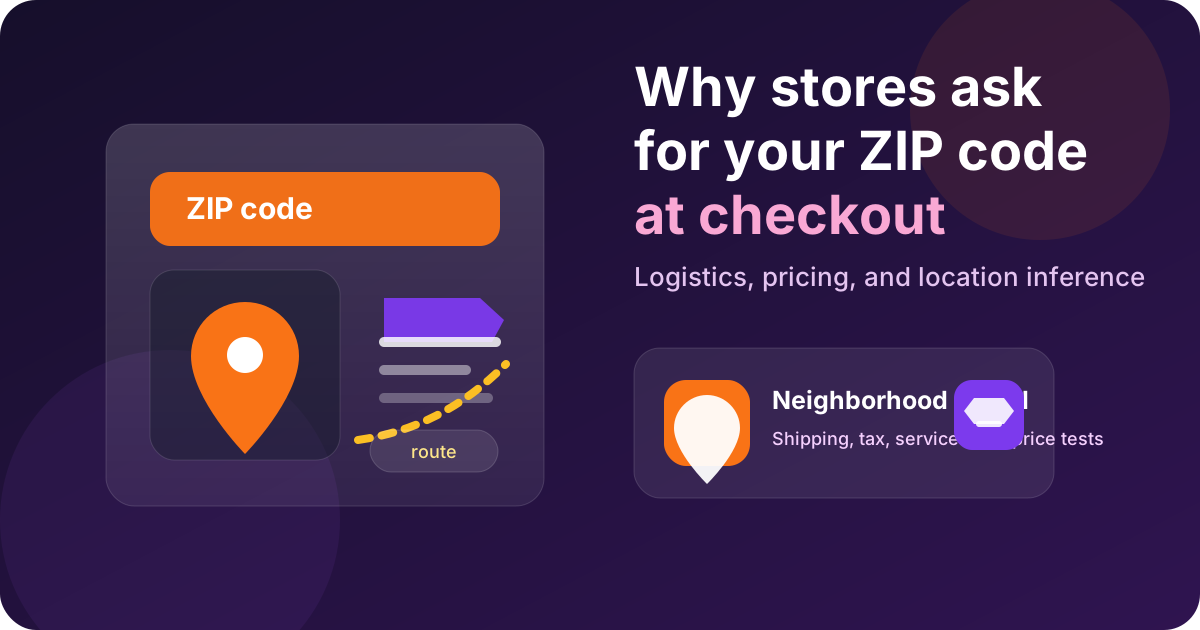
Why stores ask for your ZIP code at checkout is usually about operations first and profiling second, but the two often blur together. A ZIP code can help calculate tax, estimate shipping, route inventory, confirm service area, and pick a nearby pickup location. Those are legitimate reasons to ask for a rough location. The problem is that a postal code can also reveal neighborhood, commute patterns, region, and sometimes enough demographic context to help a retailer test offers, segment shoppers, or guess how much pressure a person will tolerate.
A ZIP code is not exact GPS data, but it is far from neutral. Combined with device type, account status, browsing history, and shopping basket, it can help a platform make inferences about income, urgency, travel patterns, and delivery preferences. For sensitive categories, even coarse location can matter. The same code can tell a site whether a product is likely shipping to an apartment, a rural road, a business address, or a neighborhood that supports different fees, service windows, or promotional treatment. That is why the line between logistics and profiling is so easy to cross.
The FTC's surveillance pricing study is relevant because it recognizes that companies may use personal data to tailor prices or offers in ways consumers do not expect. A ZIP code alone does not prove surveillance pricing. But it is one of the inputs that can help an algorithm sort shoppers into buckets before the final price appears. If a checkout flow asks for ZIP before it needs to, the shopper should wonder whether the real purpose is shipping or segmentation. The more the system learns before the total, the more it can steer before consent.
NIST's Privacy Framework and the CPPA's data minimization guidance both point to the same design rule: ask only for what the task truly needs. If the merchant needs a ZIP to estimate tax or delivery cost, it should ask for a ZIP and stop there. It should not quietly use the same field to append a person to a marketing audience, a lookalike segment, or a price-testing cohort unless that use is clearly disclosed and justified. A logistics field should not become a proxy identity field just because it is convenient.
Pew's privacy research is useful because it shows people are already uneasy about how much companies collect and how little control they feel they have. ZIP code prompts amplify that feeling because they look small while carrying a lot of context. On mobile, the merchant may ask for the field after the shopper has entered the cart, chosen shipping, or tried to check availability. At that point the user is already invested, and the field can feel less like a question than a toll gate.
Consumers can reduce the risk by giving only the minimum that is required. If the store just needs shipping math, do not attach a full address or account if a ZIP field is enough. If the field is optional, skip it. If the site also wants precise location permission, ask whether the feature truly needs that level of detail or whether a ZIP or manual store selection is enough. For sensitive purchases, it can be better to check local availability in a separate browser session before any login or loyalty step.
Retailers that want trust should keep ZIP collection narrow and explain it plainly. Shipping estimates, tax calculation, and store routing are understandable. Price testing, segmentation, and audience building are much harder to justify if they were never disclosed. If the business really needs broader location analytics, it should separate that purpose from checkout and give the shopper real control. A postal code should not be the hidden backbone of a profiling pipeline.
cloak's active-defense job is to call out that line before the shopper crosses it. A ZIP prompt may be perfectly normal, or it may be the first breadcrumb in a location-based pressure system. The right warning is not 'never enter your ZIP.' It is 'know what this field is doing, and do not let a delivery helper become a price-inference primitive.'