
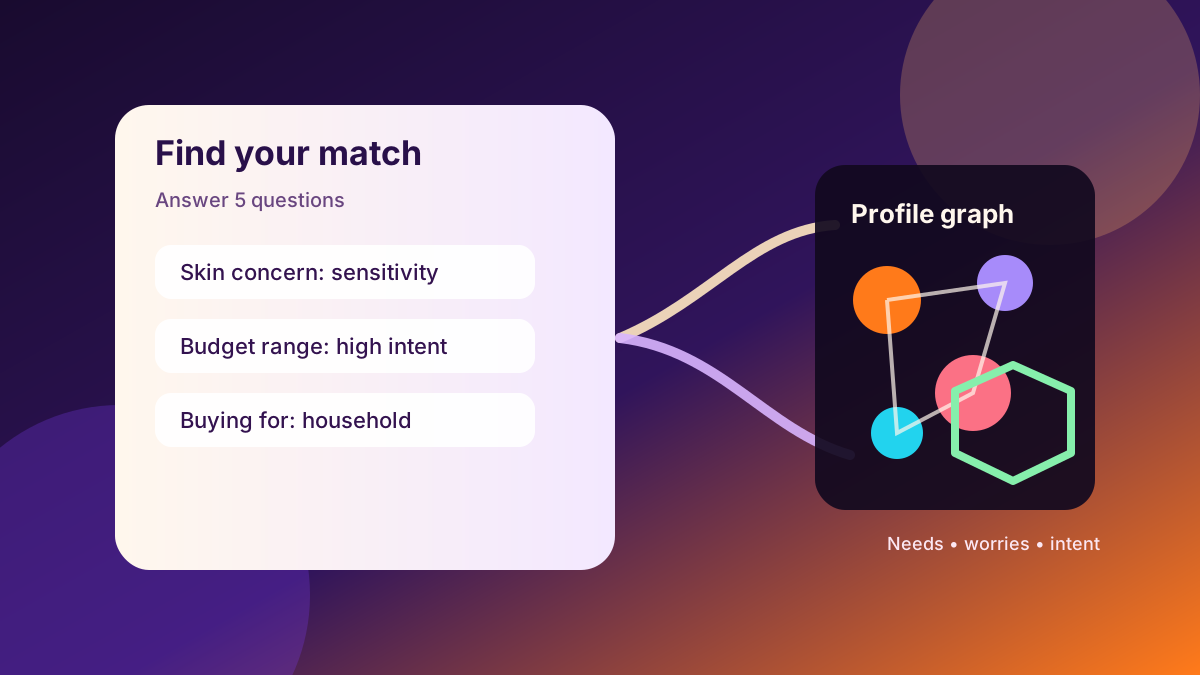
Product quiz privacy risk starts with a friendly promise: answer a few questions and the store will recommend the right moisturizer, mattress, supplement, shoe, bra size, gift, baby product, pet food, or wardrobe. The quiz feels less invasive than an account signup because the user is volunteering answers. But that is exactly why the data can be valuable. A quiz asks for clean, structured signals about needs, anxieties, budgets, household members, skin concerns, health goals, event dates, body measurements, and purchase intent before the shopper reaches checkout.
The first privacy issue is sensitivity. A beauty quiz may ask about acne, pregnancy-safe products, aging concerns, medication interactions, fragrance sensitivity, or hair loss. A wellness quiz may ask about sleep, stress, digestion, fertility, or weight goals. A gifting quiz can reveal a child's age, a partner's habits, a parent's illness, or a household celebration. None of those answers have to be medical records to become intimate. They are signals a profiling system can reuse long after the recommendation is served.
The Sephora CCPA settlement is a useful warning because California said the retailer failed to tell consumers that it was selling personal information through third-party tracking and did not properly honor opt-out signals. The case was not about quizzes alone, but it shows how ordinary retail interactions can become advertising data flows when trackers, analytics, and ad networks are attached. If a quiz answer travels with cookies, pixels, device IDs, email capture, or account data, the shopper may not be just asking for a recommendation; they may be enriching a marketing profile.
Data minimization is the practical standard. The CPPA's 2024 enforcement advisory says collection, use, retention, and sharing of personal information should be reasonably necessary and proportionate to the disclosed purpose. Applied to quizzes, that means a store should not need to retain every answer forever, merge it into broad ad targeting, or share it with unrelated vendors if the disclosed purpose was simply to pick a product. The more intimate the question, the stronger the reason should be for asking it.
The FTC's BetterHelp action makes the sensitivity point even sharper. The agency said BetterHelp shared email addresses, IP addresses, and health questionnaire information with advertising platforms despite privacy promises, leading to a settlement. Retail quizzes are not the same as therapy intake forms, but the lesson transfers: questionnaire answers can become harmful when a user believes they are being used for help and the company treats them as advertising or optimization fuel.
Dark patterns also change the risk. A quiz may hide marketing consent behind a progress bar, require an email address before revealing results, preselect SMS offers, or make the user create an account after investing time in the flow. The FTC's dark patterns report warns that design can steer people into decisions they did not intend. In a quiz, the pressure is subtle: the shopper has already disclosed enough to feel committed, so the final email gate or account prompt feels like part of the recommendation rather than a separate data trade.
A practical consumer checklist is to treat quizzes like forms, not entertainment. Skip questions that are not necessary for the recommendation, use an email alias if results require email, avoid entering a phone number for a one-time product suggestion, do not connect the quiz to a loyalty account for sensitive categories, and screenshot the recommendation if the site tries to force account creation. If the quiz asks about health, family, finances, pregnancy, children, or body measurements, the privacy bar should be much higher than for a color preference.
cloak's role is not to tell people never to use quizzes. A good recommendation flow can reduce waste and make shopping easier. The active-defense question is whether the site is using the quiz narrowly or converting the answers into a durable profile. cloak should warn when a helpful form starts behaving like a data intake funnel: unnecessary identifiers, third-party tracking, email capture before value, broad consent language, and sensitive answers being tied to checkout identity.