
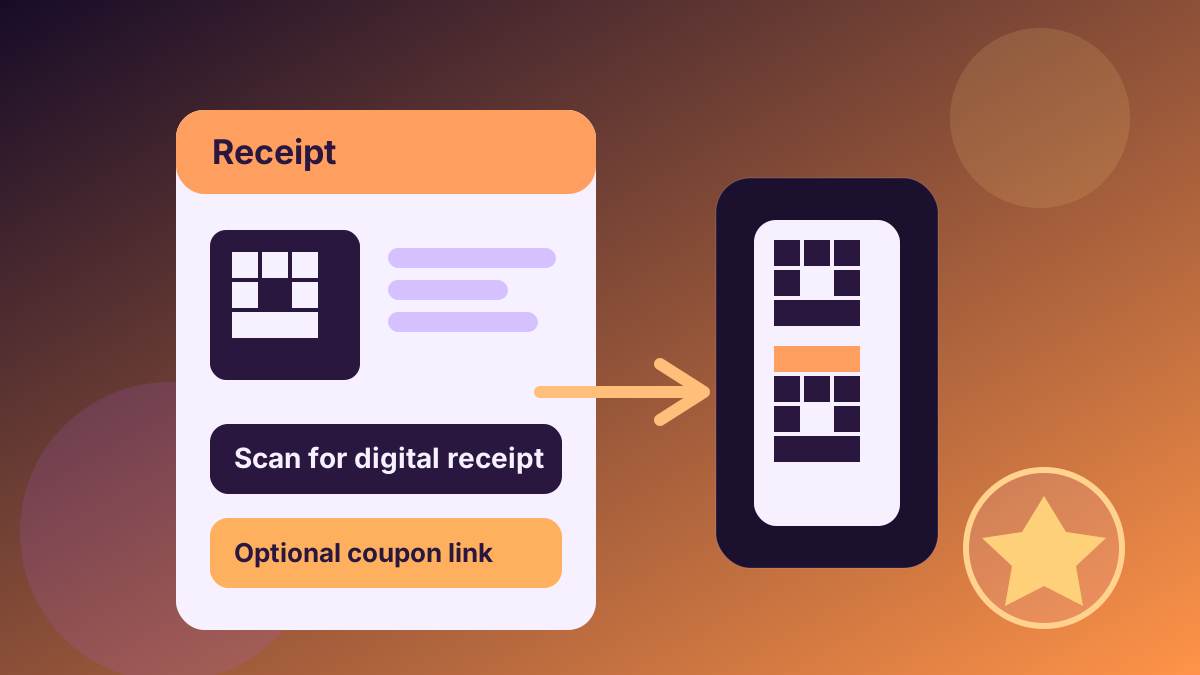
Store receipt QR code privacy risk begins when a paper receipt stops being paper. A code can send the shopper to a digital receipt, a warranty page, a survey, a coupon, a return portal, or a sign-in prompt. That looks efficient. It also creates a bridge from an offline purchase to a phone browser, a mobile app, or a login session where tracking and identity capture can happen again.
The QR code itself is not the only issue. The destination matters. If scanning a receipt pushes the shopper into a site that loads ad scripts, asks for an email address, sets a persistent session, or follows the visitor across pages, the store is using the receipt as a funnel into a richer profile. That can tie a single checkout to a device, a browser, and sometimes a marketing identity the shopper never meant to create.
The FTC warns that QR codes can hide harmful links, which makes basic caution important. But the consumer-protection lesson also applies to ordinary commerce. If a retailer uses QR links for digital receipts or support, it should be explicit about where the link goes, what data it collects, and whether scanning is optional. A code printed on a receipt should not be a stealth onboarding step for more tracking.
The FTC's mobile privacy disclosures work reinforces the idea that disclosure should be understandable at the point of use. If a receipt QR code opens a mobile flow, the customer should see the privacy tradeoff before the page starts collecting. The CPPA's data-minimization advisory points in the same direction: use only the data needed for the requested purpose, and keep it proportionate. A receipt lookup does not need an open-ended profile.
The NIST Privacy Framework is a useful lens because it separates the purpose of the interaction from the data practices that support it. A support receipt page may only need an order number and a short-lived token. It does not need to become a general-purpose identity collection point. If the QR link encourages a login, a newsletter sign-up, and a tracking consent prompt all at once, the retailer has blurred convenience into capture.
Consumers can defend themselves with a few habits. Check the destination before completing the scan if your phone shows the preview, avoid logging in unless the digital receipt really adds value, and do not treat a QR code as inherently safer than a URL. If the receipt already contains the details you need, there is often no reason to hand the merchant a second path into your phone.
Retailers can be much cleaner. Use QR codes only for a narrow function, do not mix returns with marketing in the same flow, keep session tokens short-lived, and separate support from advertising. A receipt should prove the purchase, not create a new tracking route.
Retailers can also reduce the need for scanning altogether. A plain printed URL, a short order number, and a non-QR support path give shoppers a way to get help without giving the store a fresh mobile session. If the QR code is only there to increase sign-ups, newsletter capture, or ad measurement, it should not be framed as a receipt feature. Utility first, tracking second, and never both by default.
A receipt page should also make sharing reversible. If the shopper wants a digital copy, it should work with a short-lived token instead of a login wall, and it should not ask the same person to opt into marketing just to see a proof of purchase. Separate service from persuasion, and keep the proof of purchase smaller than the marketing temptation.
cloak's active-defense role is to notice when a receipt link becomes a profile link. It should warn when a QR flow asks for more identity than the task requires, when a digital receipt page starts loading trackers, and when the shopper is pushed from a simple proof-of-purchase into a broader marketing or login journey.