
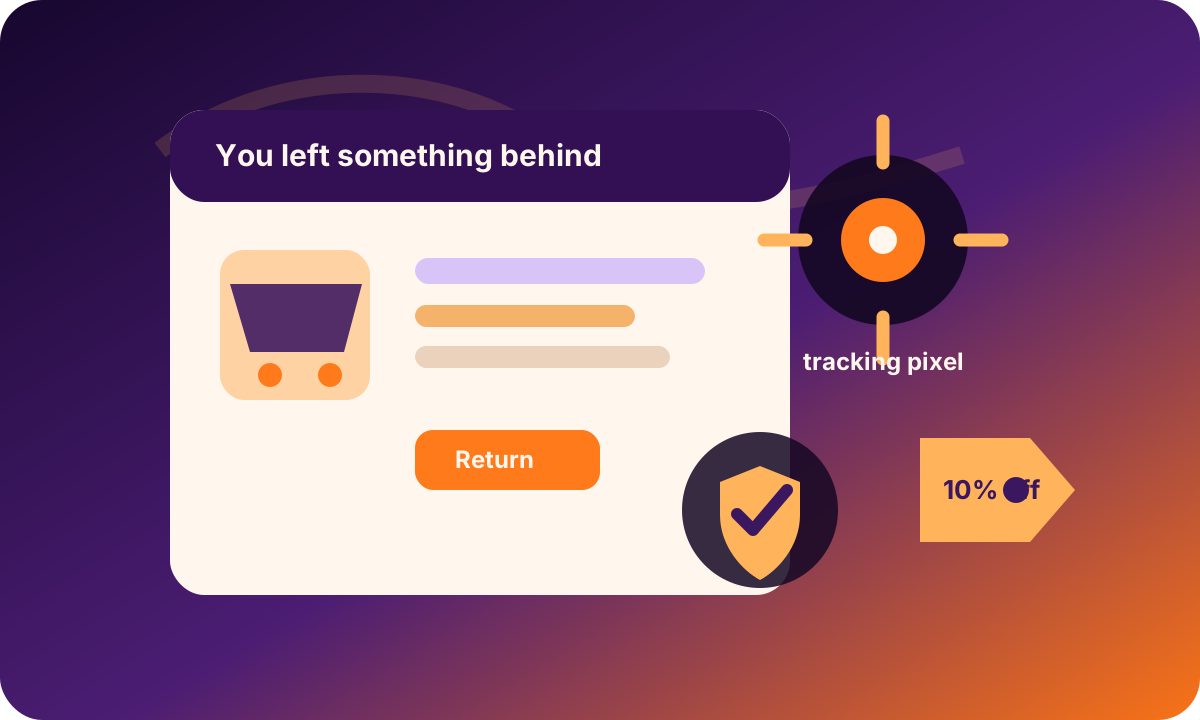
Cart abandonment email tracking privacy risk appears when a store emails you about something you almost bought. The reminder may be helpful: you forgot a pair of shoes, a medication organizer, a hotel room, a baby product, a security camera, or a gift. But the email also proves that the merchant connected a browsing session to an address, remembered the product, recorded the timing, and decided your hesitation was worth targeting. That is a lot of signal before payment ever happened.
Abandoned-cart flows usually depend on identity capture. The store may get an email from a logged-in account, loyalty profile, account-creation step, newsletter signup, checkout field typed before completion, browser cookie, marketing platform, or previous purchase. Once the email is attached to the cart, the merchant can send reminders, coupons, urgency messages, price-drop notices, and product alternatives. The privacy problem is not that reminders exist. The problem is when a store treats a half-finished checkout as permission to build a durable intent profile.
The FTC's discussion of pixel tracking is directly relevant because marketing emails often do more than display text. Tracking pixels and link redirects can tell senders whether a message was opened, when it was opened, which device or IP context loaded images, and which product link was clicked. The FTC has warned that pixels can collect and share identifying information in ways consumers do not clearly understand. In a cart email, that tracking is attached to a high-value fact: this person almost bought this exact thing.
CAN-SPAM rules also matter, though they do not solve the whole issue. The FTC's compliance guidance focuses on truthful headers and subject lines, identification of advertising, physical mailing address, and a clear opt-out mechanism. Those are important baselines. But an email can comply with commercial-email rules while still creating privacy risk if it exposes a sensitive product in the subject line, loads third-party pixels, or keeps firing reminders after the user clearly backed away.
The sensitivity depends on the product and household context. A reminder for socks is low-stakes. A reminder for fertility products, medical devices, debt-help books, gender-affirming items, security equipment, children's needs, legal services, or travel to a sensitive destination can reveal private life through a notification preview. If the email lands on a shared family tablet, workplace inbox, smart-watch notification, or compromised account, the almost-purchase becomes visible to people the shopper never intended to involve.
Timing can become pressure. A store may wait one hour, twenty-four hours, or a week; add a discount; warn that stock is low; or show social proof. Some of that is ordinary merchandising. But when reminders adapt to repeated opens, clicks, or price-checking behavior, the page has turned hesitation into a feedback loop. The user is no longer simply browsing; they are being re-engaged based on a measured moment of uncertainty.
Data minimization gives a cleaner design standard. The CPPA advisory asks whether collection, use, retention, and sharing are reasonably necessary and proportionate. A cart reminder may need an email address, product ID, and expiration window. It does not automatically need broad ad-pixel sharing, indefinite retention of abandoned sensitive items, cross-device identity matching, or reuse of the abandoned cart as a future willingness-to-pay score. If the user abandons, that should often mean less data use, not more.
Consumers can reduce exposure by using email aliases, blocking remote images, separating sensitive purchases from logged-in accounts, checking newsletter and SMS opt-ins at checkout, and clearing carts for products they do not want remembered. For sensitive items, avoid typing an email until you are ready to buy, or use a merchant that lets you browse and compare without account pressure. If a reminder arrives for something private, use the opt-out and consider whether the merchant earned enough trust for the purchase.
cloak's active-defense role is to catch the moment when a cart becomes a dossier. It should warn when a checkout captures an email before it is necessary, when abandoned-cart pages load heavy marketing stacks, when reminder links carry tracking parameters, and when email pixels turn a private almost-purchase into another behavioral signal. A reminder should help a person finish a choice, not keep mining the fact that they hesitated.