
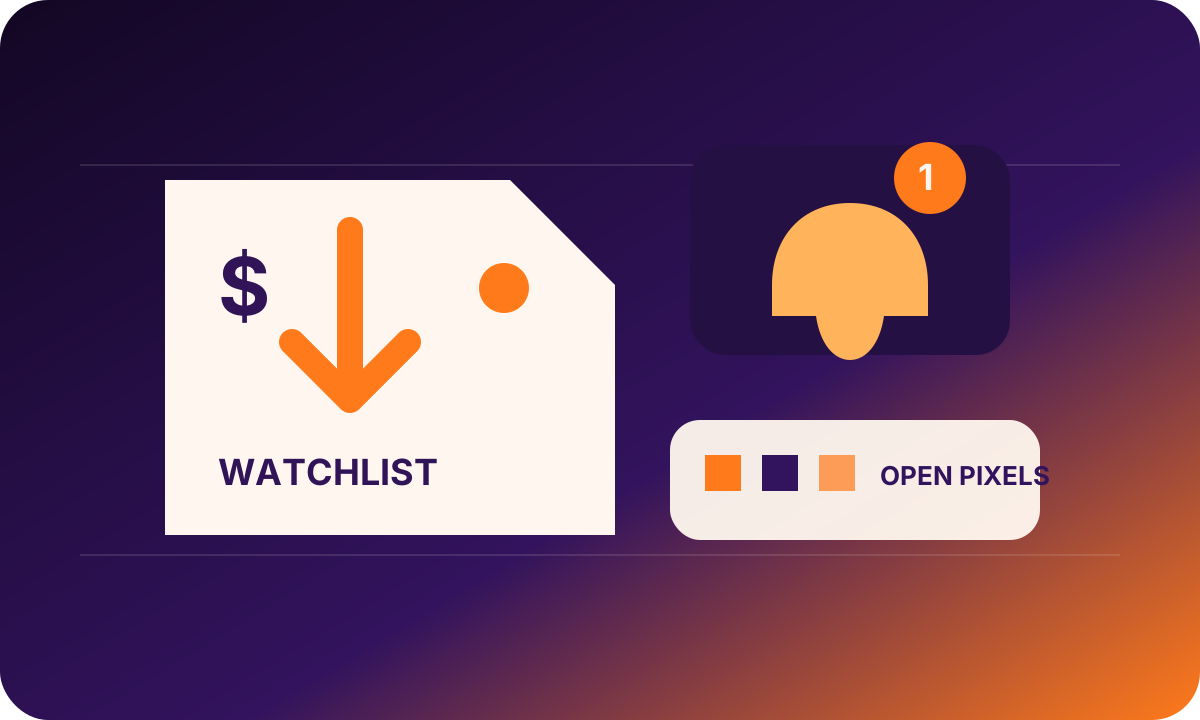
Price drop alert privacy risk hides behind one of the most reasonable shopping features on the internet. A customer does not want to overpay, so they tap 'notify me when the price drops,' add an item to a wish list, or sign up for a back-in-stock alert. The trade looks simple: email address in, savings out. But a watchlist can tell a retailer exactly which product you want, how long you are willing to wait, how sensitive you are to price, and which notification channel can pull you back.
That information is powerful because it arrives before checkout. A cart shows possible intent. A price alert shows patient, budget-aware intent. A back-in-stock alert shows urgency around scarcity. A wish list can show gift plans, health needs, life events, children's interests, travel preparation, or financial limits. If the merchant joins those signals to account history, device identity, loyalty data, and email engagement, the alert becomes a pressure map rather than a neutral reminder.
The FTC's surveillance pricing inquiry is relevant because it asks how companies may use personal data to tailor prices and offers. A price alert does not prove personalized pricing, but it creates exactly the kind of signal that could be used to decide who receives a discount, who sees urgency language, or who is nudged with a limited-time coupon. The privacy concern is not only that a store knows you want the product. It is that the store may learn how much leverage it has before the final price appears.
Email and notification tracking can deepen the loop. A price alert email may include open pixels, click identifiers, campaign tags, and product-specific links. A mobile alert may connect interest to app identifiers, push tokens, location permission, or lock-screen behavior. The FTC's dark patterns report matters here because notification design can make re-entry feel urgent: 'only two left,' 'deal ends soon,' or 'someone just bought this.' Some scarcity is real. Some is pressure. Users deserve to know the difference.
Data minimization gives a better design rule. The CPPA's advisory says businesses should collect and use personal information only as reasonably necessary and proportionate to the disclosed purpose. A price alert needs a product identifier and a way to send the alert. It does not automatically need broad browsing history, long-term retention, cross-site ad sharing, or separate marketing enrollment. The FTC's guidance on protecting personal information reinforces that companies should limit access, retention, and unnecessary collection around customer data.
Consumers can make price alerts safer by keeping them narrow. Use guest alerts when possible, avoid adding sensitive products to account-tied wish lists, unsubscribe after the decision is done, and be cautious when a price alert requires a mobile app or broad notification permission. If the item is sensitive, consider checking manually or using a browser session that is not tied to a loyalty account. The savings may still be worth it, but the shopper should recognize that the alert is a data exchange.
Retailers can earn trust by making the exchange explicit. Say whether the alert also enrolls the user in marketing. Do not require account creation for a single alert. Avoid tracking pixels when the sole purpose is notification delivery. Delete stale watchlist records. Separate operational alerts from ad targeting and price experiments. A consumer-friendly feature should not quietly become evidence of vulnerability, impatience, or price ceiling.
cloak's active-defense role is to identify when a deal reminder becomes a manipulation surface. It should flag alerts that demand unnecessary identity, watch for email-gated wish lists, and warn when scarcity or discount timing appears tied to repeated visits. It should also notice when a single alert turns into broad marketing consent or app-notification pressure. The point is not to tell people never to use price alerts. It is to help them save money without handing stores a durable map of what they want, when they want it, and how hard they can be pushed.