
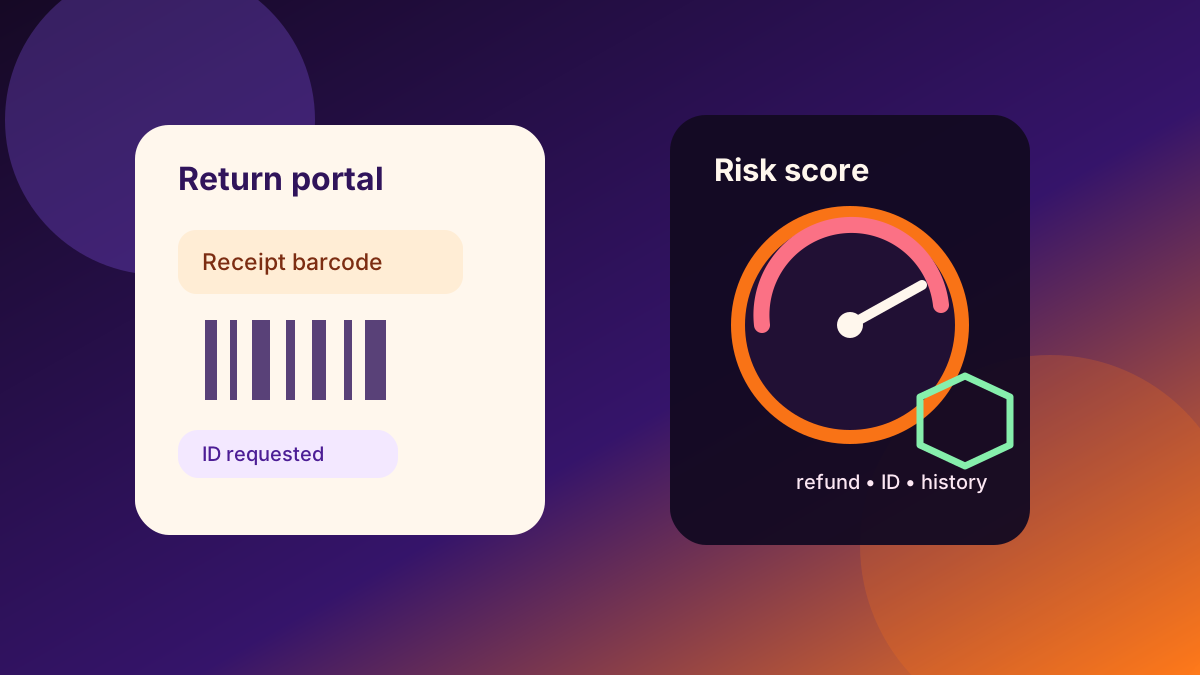
Retail return fraud scoring privacy risk starts from a real merchant problem. Returns are expensive, fraud exists, and stores have legitimate reasons to prevent fake receipts, wardrobing, empty-box claims, stolen merchandise returns, and repeat abuse. The National Retail Federation's 2025 Retail Returns Landscape estimates total U.S. retail returns at $849.9 billion for 2025, online return rates at 19.3%, and fraudulent returns at 9% of all returns. Stores are not inventing the issue.
The consumer risk begins when fraud prevention becomes an opaque customer score. A return counter or online return portal can collect receipts, order history, item category, payment method, shipping address, device, IP address, account age, loyalty ID, government ID for no-receipt returns, communication history, chargeback history, and previous refund outcomes. Some of that may be necessary to process the return. Some of it can also become a durable label about whether the shopper is trustworthy.
The privacy problem is not simply that a store remembers returns. It is that the user often cannot see how the decision was made. A legitimate customer may be denied a refund, forced into store credit, asked for ID, routed to a manual review, or treated differently across channels without knowing which signal mattered. Was it too many returns? A high-value product? A mismatch between shipping and billing? A shared household account? A resale-risk category? A device previously associated with another shopper? Opaque scoring turns a policy dispute into an information imbalance.
The FTC's surveillance-pricing inquiry is relevant because it shows regulators looking at intermediaries that use personal data, shopping history, location, demographics, and behavior to shape commercial treatment. Return scoring is not identical to pricing, but the underlying pattern is similar: data about a person can change what the business offers, withholds, flags, or escalates. When a return score affects refund rights, checkout friction, future offers, or account trust, it becomes part of the decision environment cloak cares about.
The FTC has also warned companies using AI and automated tools to aim for truth, fairness, and equity, avoid exaggerated claims, and consider whether outcomes are discriminatory or unfair. Return fraud tools do not need to be called AI to raise similar questions. If a model or rule set flags people based on proxies, shared addresses, device reputation, or category stereotypes, the store may reduce loss while creating unfair false positives for normal shoppers.
Data minimization should discipline the process. The CPPA advisory frames collection, use, retention, and sharing as needing to be reasonably necessary and proportionate to the purpose. A store may need proof of purchase to refund an item. It is harder to justify indefinite retention of ID scans, broad sharing with unrelated marketing systems, or using return data to personalize pressure without clear disclosure. Fraud prevention should not become a loophole for building a richer customer dossier.
A practical checklist for shoppers is to keep receipts, use accounts deliberately, avoid mixing many people's purchases into one loyalty ID, ask for written policy reasons when a return is denied, avoid handing over ID unless required by the policy or law, and separate sensitive purchases from accounts where return behavior could affect unrelated shopping. For expensive items, read the return policy before purchase and screenshot it. The point is not to game the system; it is to avoid being trapped by a score you cannot inspect.
Households can accidentally magnify the signal. One loyalty account may contain a teenager's clothing returns, a parent's medical-device return, a spouse's electronics exchange, and holiday gifts bought by several people on the same card. A fraud system looking only at aggregate behavior may treat the account like one high-risk shopper. That is why return data should be narrow, explainable, and separated from unrelated marketing or pricing decisions whenever possible.
cloak's role is to make hidden treatment visible. Return fraud defense can be legitimate, but active privacy defense should warn when a refund flow asks for excessive identifiers, loads trackers on a return portal, links no-receipt returns to durable identity, or shifts from policy enforcement into unexplained profiling. A fair return system should protect merchants from abuse while giving honest shoppers a clear path, narrow data use, and enough explanation to contest a bad label.