
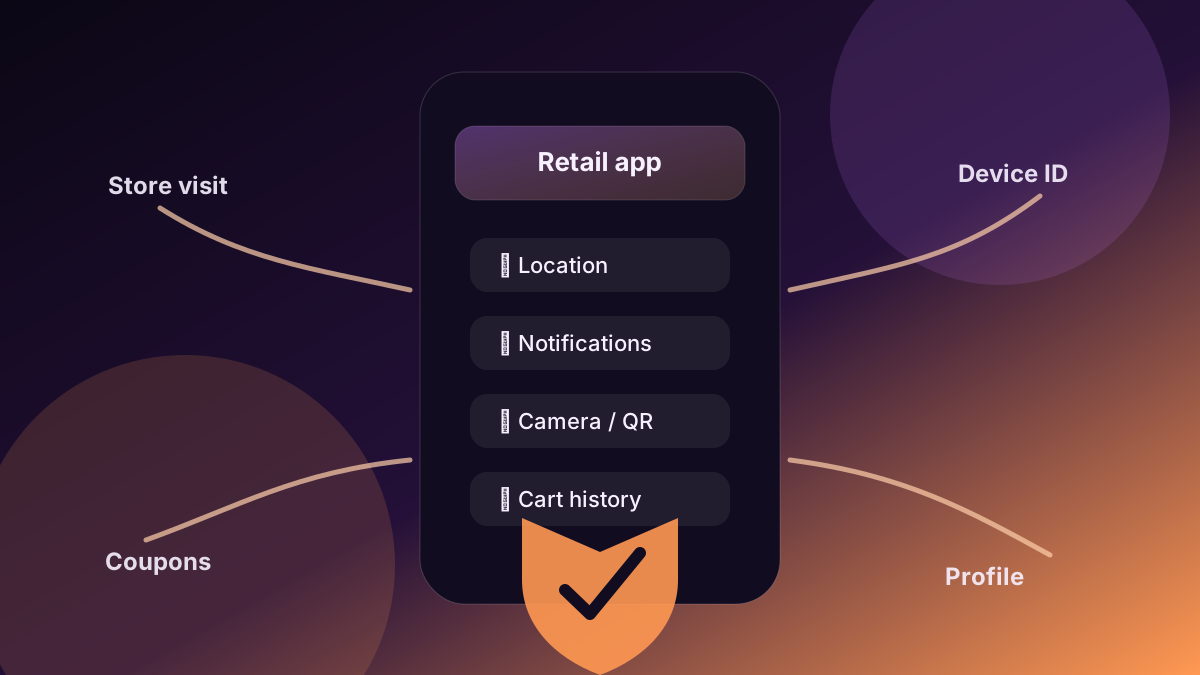
Retailer app permissions privacy risk starts with a familiar trade: download our app, turn on location, allow notifications, scan a barcode, save a coupon, and checkout faster. Each request can have a legitimate use. Location can find a nearby store. Camera access can scan a receipt or QR code. Notifications can announce curbside pickup or a delivery change. The problem is that permissions also make the store app a privileged observer on the most personal device a shopper owns.
The FTC's mobile privacy report framed transparency as a core mobile problem because small screens, background collection, and app ecosystems make it harder for people to understand what is happening. Retail apps fit that warning neatly. A shopper may install one app for a one-time discount, but the app can ask for always-on location, push-notification access, contacts-adjacent sharing prompts, camera use, Bluetooth beacons, advertising identifiers, app analytics, and account login. The coupon is temporary. The permission surface can persist.
Location is the clearest example. A store may need coarse location to show local inventory, but precise or background location can reveal home, work, school pickup, medical errands, competitor visits, income clues, travel patterns, and how often someone returns to a shopping district. Even when a retailer says it uses location for convenience, the same signal can support segmentation, attribution, foot-traffic analysis, fraud checks, or personalized offer timing. That is why data minimization matters: collect what is reasonably necessary for the feature, not everything that could someday be useful.
Notification permission deserves the same skepticism. A pickup alert is helpful. A repeated promo sequence can become pressure infrastructure. The FTC's dark-patterns report warns about interfaces that steer or manipulate consumer choices. In shopping apps, the manipulation can arrive after the user leaves the store: expiring coupons, back-in-stock alerts, cart reminders, loyalty countdowns, app-only drops, and location-triggered nudges. The app does not just remember the shopper. It gets a direct line to interrupt them.
Camera and scanning permissions can also look harmless while expanding the profile. Barcode scans, QR codes, receipt uploads, size finders, product search, and augmented-reality try-ons can expose what the shopper is considering, what they bought elsewhere, which products are in their home, and which aisle or shelf caught their attention. The risk is not that every scan is abusive. It is that the app can combine scan intent with login, loyalty number, device identifiers, location, push engagement, and purchase history.
Pew's privacy research explains why people feel trapped by these choices. Many Americans say they are concerned about how companies use the data they collect and feel they have little control. Retail apps often exploit that fatigue by making the privacy-preserving path feel worse: no app-only coupon, slower pickup, harder receipt lookup, fewer loyalty benefits, or repeated prompts to enable permissions after refusal. Consent is thinner when the alternative is a worse shopping experience.
A practical defense is to treat store apps as temporary tools, not permanent companions. Use the mobile website when it works. Grant location only while using the app, enter ZIP codes manually, deny background tracking, turn off promotional notifications after the transaction, avoid linking the app to every payment and loyalty account, and delete apps after single-use discounts. If a permission request appears, ask what feature will break if you say no. If the answer is unclear, the request is probably broader than the moment requires.
Households should be especially careful with shared phones and tablets. A parent may install a grocery app, a teenager may scan a beauty product, and a caregiver may use the same account for pharmacy pickup or appliance delivery. The retailer sees a tidy customer profile, but the device is really a shared life surface. App permissions can merge those roles unless the user deliberately separates accounts, aliases, and devices.
cloak's anti-exploitation view is that the phone should not become a silent loyalty antenna for every store. The goal is not to make shopping inconvenient. It is to warn when a convenience feature becomes durable recognition: a permission, account, device signal, or nudge channel that lets the merchant carry pressure from the aisle to the home screen.